

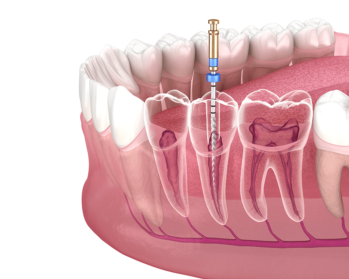
Mechanical endodontics is the most modern dental technology, which increases the success rate of tooth root healing and, at the same time, shortens the duration of treatment! The use of ultrasound instruments makes it easier to find hidden canals, and the root canal irrigation itself is more efficient because it is possible to wash the parts of the inside of the teeth that cannot be cleaned mechanically.
Inflammation of the dental nerve occurs when bacteria penetrate through caries to the pulp chamber. Above is the nerve and there they cause its inflammation. If left untreated, bacteria have an open path through the root canals to the bone itself, where long-term inflammation causes pathological changes in the bone, such as granulomas and even cysts. This usually results in severe pain, but in some cases the death of the nerves can be painless, slowly and imperceptibly due to a slowly progressing infection. Precisely such inappropriate inflammations, due to strong bacterial toxins, can cause changes in the skin and scalp with partial hair loss in certain places. Because of such “silent” inflammations, it is important to have an X-ray examination once a year in order to detect and prevent them in time.
Penetration of bacteria to the bone causes inflammation and requires endodontic treatment. It is extremely important that the endodontic treatment of the root canal is performed as correctly as possible and that the cause of the infection is removed, that the canals are cleaned and properly filled. Sensitivity and intense pain is a normal reaction after an endodontic procedure and is caused by the action of the immune system on residual microorganisms.
In some exceptional cases, endodontic treatment cannot be successfully performed due to thin, impenetrable root canals or previous poor endodontic procedures, and some of these cases can be successfully resolved by surgical removal of the root tip.
Endodontic treatment procedure
- Removal of the dental nerve
- Cleaning and expansion of root canals
- Possible antibiotic treatment in case of intense infection and severe pain
- Obturation of the canal with biocompatible material
- Control digital X-ray for a cross-section of the newly created situation
- Composite filling or ceramic crown
The entire procedure is solved in one visit!
Carry out endodontic treatment mechanically, avoid manual treatment! The machine is many times more precise and faster and saves your time!