

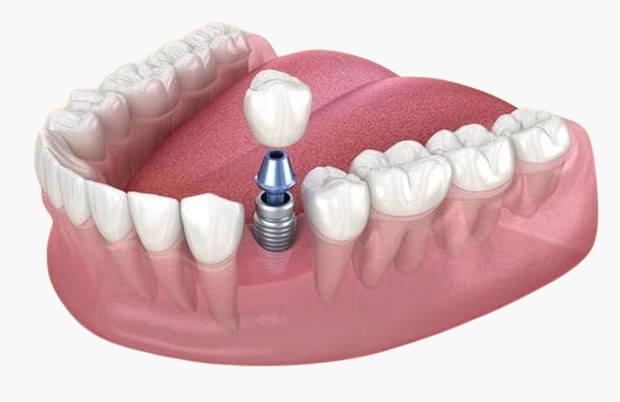
Placement procedure:
Dental implants, like titanium screws, are carefully inserted into the jawbone to serve as a solid base for the prosthetic tooth. The procedure includes the implant placement and the healing phase, known as osseointegration, during which the implant grows with the surrounding bone.
Materials:
The use of titanium and titanium alloys as the main materials for making implants is not a coincidence. These materials were selected for their excellent biocompatibility, strength and corrosion resistance, making them the optimal choice for replacing lost teeth.
Indications for implants:
Dental implants are the ideal solution for those who have lost teeth due to injuries, gum disease or other causes. It is important that candidates for implants have sufficient bone density and general good oral health.
Advantages of implants:
One of the key advantages of dental implants is the stability and functionality they provide, comparable to natural teeth. In addition, they do not require damage to adjacent teeth, which is often the case with bridges, and they encourage the preservation of bone density in the jaw.
Maintenance and hygiene:
Regular cleaning of implants is essential for longevity. To ensure optimal implant health, patients must visit the dentist regularly and follow hygiene practices at home.
Risks and complications:
Although complications are very rare, patients should be aware of possible infections, rejection of implants or problems with osseointegration. Cooperation with a qualified dentist and adherence to care instructions are key in preventing these risks.
Duration of the procedure:
The process from the implant placement to the placement of the prosthetic tooth can take 3 to 4 months, including the stages of bone healing and the creation of a customised prosthetic solution.
Prices:
The cost of dental implants varies depending on various factors, including the number of implants, materials and local dental costs.
You can view the price list here
Alternative solutions:
For those who are not candidates for implants, there are alternatives such as bridges or dentures. The dentist will help in choosing the best solution according to the individual needs of the patient.
Importance of regular check-ups:
After implant placement, regular visits to the dentist play a key role in monitoring the health of the implant, maintaining its longevity and preventing possible complications.
Psychological aspects:
In addition to physical benefits, dental implants have a positive impact on patients’ psychological well-being, improving self-confidence and smile aesthetics.
Dental implants represent a revolutionary solution for those who want to restore their smile and functionality. Carefully following the dentist’s instructions, regular check-ups and proper care are key elements for longevity and patient satisfaction. A smile that looks and feels natural becomes a reality with dental implants.
FAQs about dental implants:
1. How long does the dental implant placement procedure take?
The procedure of placing dental implants includes several stages, including the placement of the implant and the healing period. The whole process can take 3 to 4 months, and the exact time depends on the individual factors of the patient.
2. Do you feel pain during or after implant placement?
Most patients experience minimal discomfort during the procedure, which can usually be controlled with post-operative analgesics. The dentist will provide all necessary information about post-operative care.
3. How many implants do I need to replace missing teeth?
The number of implants depends on the individual needs of the patient, as well as the location and density of the bones. The dentist will create a personalised treatment plan according to your specific needs.
4. How long do dental implants last?
With proper care and regular dental check-ups, dental implants can last a lifetime.
5. How long does the osseointegration process take?
The process of osseointegration, which is crucial for the fusion of the implant with the bone, usually lasts 3 to 4 months. Healing time may vary depending on individual characteristics.
6. How are dental implants maintained?
Implant maintenance includes regular cleaning, flossing, and regular dental examinations. Adherence to hygienic practices is essential for the longevity of the implant.
7. How long do I have to wait before I can get a prosthetic tooth on an implant?
After the implant has been successfully placed, it takes time to heal before the prosthetic tooth can be placed. This period can last several months.
8. Can I get implants if I already have dentures?
Yes, implants are often used as a support for dentures, providing stability and security.
9. Are there any risks or complications associated with implants?
Although complications are rare, infections or implant rejection are possible. If the mentioned complications occur, they are resolved promptly and, if the implant is rejected, a new one is placed that is not at the patient’s expense.
The dentist will provide detailed information about the potential risks.
10. How are dental implants priced and are there payment options?
Implant prices vary, and we offer different payment options such as card payment in installments. You can see the price list here.
11. How important are regular check-ups after implant placement?
Regular dental check-ups are crucial for monitoring the health of implants, detecting potential problems and preserving longevity.
To make an appointment or for more information, contact us here.